
People often ask me: What is spiritual abuse?
That’s a really important question. If we don’t understand what spiritual abuse is, it’s hard to recognise it, talk about it, or get help.
Sadly, many people are leaving religious or spiritual groups feeling hurt, confused, or even traumatised. Talking about this honestly can help.
Why This Matters
Religion and spirituality can be beautiful. They can help people feel connected, loved, and full of purpose. But because they are so personal and powerful, people can misuse them. When someone uses spiritual ideas to control others, it can cause deep emotional pain.
When we call this spiritual abuse, we help people understand what happened. We also help churches and groups make changes so it doesn’t happen again.
Where Did the Term “Spiritual Abuse” Come From?
The phrase “spiritual abuse” hasn’t been around very long. It was first used in 1991 in a book called The Subtle Power of Spiritual Abuse. In the UK, people didn’t really use the term until the 2010s.
Even though the words are new, the behaviour is not. People have used religion to control others for a long time. Now, we have better words to talk about it. That helps us take action.
What Is Spiritual Abuse?
Two researchers, Lisa Oakley and Kathryn Kinmond, explain it like this:
Spiritual abuse is a form of psychological and emotional abuse. It involves coercive control in a religious setting or with a religious reason.
Breaking the Silence on Spiritual Abuse, by Lisa Oakley and Kathryn Kinmond
I like to add the world spiritual as well as religious to this definition. Spiritual abuse happens in lots of different settings, including ones which call themselves ‘spiritual but not religious’.
Let’s break the definition down:
- Spiritual abuse happens in a religious or spiritual setting (like a large or small faith group, a family, or a one-on-one relationship).
- Someone uses religion or spiritual ideas to control others.
- They give spiritual reasons why the abuse is somehow right or needed.
Not all spiritual practices are abusive! But if someone uses religion to force people to do what they want, that’s abuse.
- If you are worried you are being spiritually abused, this post might help you: Am I Being Spiritually Abused? Signs, Support, and What to Do Next
- Or if you are worried about someone else, you might find this post useful: Supporting Someone Facing Spiritual Abuse: How You Can Help
What Is Coercive Control?

Spiritual abuse often includes something called coercive control.
This means someone tries to take away your freedom by:
- Making you depend on them
- Controlling your time or money
- Keeping you from getting help
- Making you scared to speak out
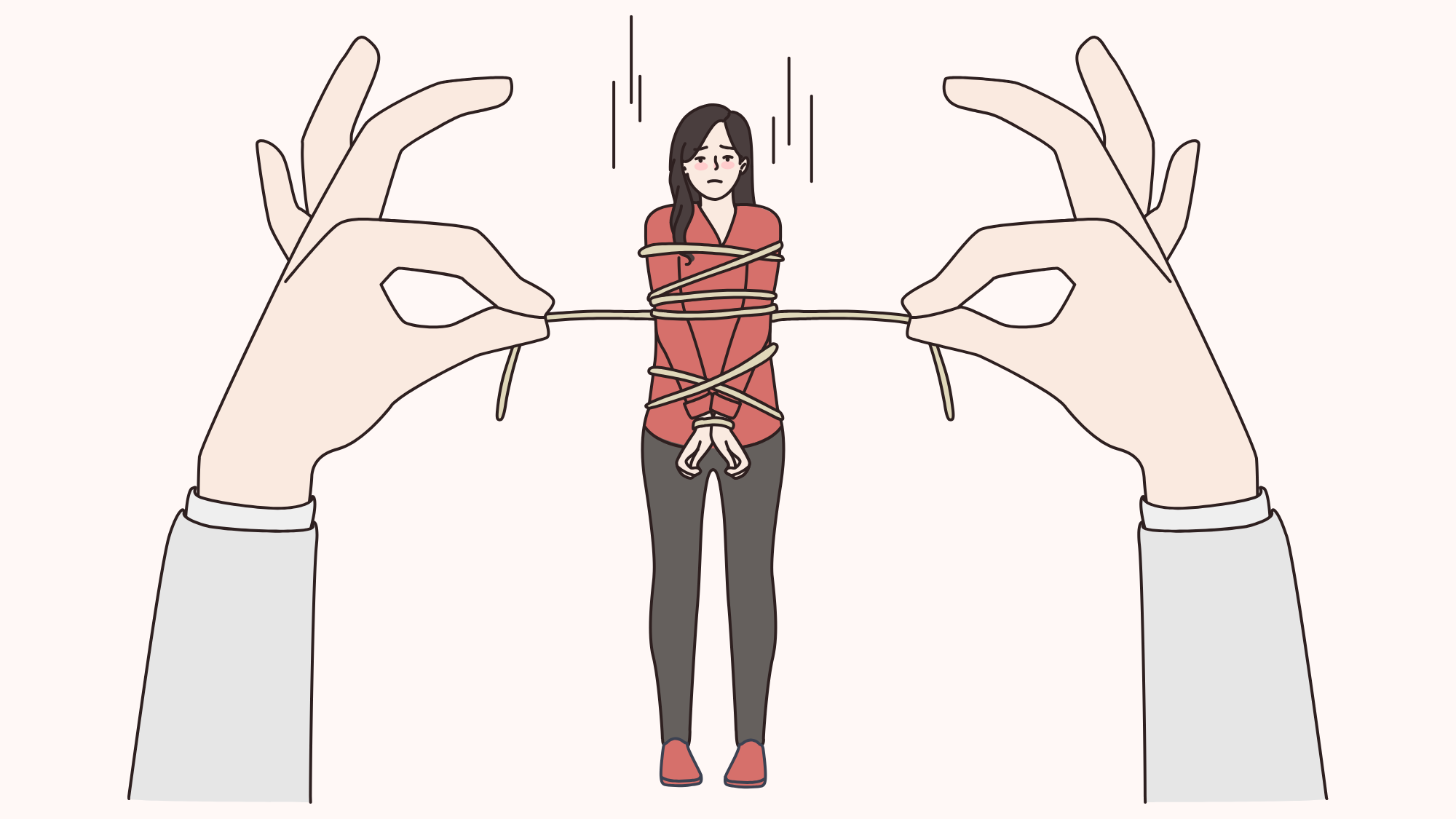
The goal of coercive control is to make the person being abused feel stuck and powerless. The abuser wants control over their time, their money, their work, and sometimes even their body. It makes it hard for a person to leave or say no.
Coercive control can cause a lot of harm. According to Women’s Aid, it can make people feel trapped, scared, and like they have no choices. It can take away their freedom and their rights. Even though you can’t always see it, the effects are real and serious.
In religious settings, coercive control often happens through something called indoctrination, where people use religious teachings and practices to control how you think. You can learn more about indoctrination here: What Is Indoctrination? How Spiritual Abuse Can Change How You Think
Where Can Spiritual Abuse Happen?
Spiritual abuse can happen in lots of different settings, such as:
- Religious organisations, like churches, mosques, temples or synagogues
- Religious orders, where people live together and dedicate their lives to the group
- Spiritual groups, like meditation or mindfulness groups
- Online groups which use spiritual or religious teachings
- Families which have a spiritual or religious belief system
- One-on-one relationships with a spiritual ‘mentor’ or ‘guru’

Again, it is important to remember that lots of religious and spiritual groups are not abusive. But just because there are lots of healthy ones doesn’t mean we should ignore times where there are problems.
Key Signs of Spiritual Abuse
Here are some common signs of spiritual abuse. They come up again and again in real stories from survivors.
- People make you give time, money, or work in unfair ways
- They force to share personal thoughts or feelings with the group
- They tell you what to do and don’t let you make your own choices
- They tell you to keep secrets or not speak up about problems
- You feel pressure to act like everyone else to be accepted
- People tell you that the harmful things that are happening to you are “God’s will” or part of your “spiritual path”
- They tell you to obey people who hurt you
- The group says they’re better than everyone else and only they know the truth
- If you disagree or ask questions, people ignore or gossip about you
You can read more examples in this post: Examples of Spiritual Abuse: Learn to Spot the Signs

Is Spiritual Abuse a kind of Spiritual Attack?
No, spiritual abuse is not a kind of spiritual attack. Spiritual abuse is where someone is using ideas or traditions from a religion or spiritual teaching to emotionally or psychologically control someone else, not spiritually.
If you are experiencing things like night terrors, panic attacks, feelings of being watched or monitored, or insomnia, whether or not you believe that this is being caused by spiritual attack, it would be sensible to get support from a medical professional.
How Spiritual Abuse Connects with Other Abuse
Spiritual abuse often happens alongside other forms of abuse, like:
- Physical abuse
- Sexual abuse
- Financial abuse
People may use spiritual ideas to justify or hide other forms of abuse.
Even if the harm starts as something else, like physical violence, spiritual abuse may keep the victim trapped.
For example, if a religious leader hits someone, that’s physical abuse. It happens in a spiritual place, but it might not count as spiritual abuse on its own.
But here’s when it does become spiritual abuse:
- The leader says that hitting is part of a spiritual lesson, or that a holy book allows it.
- The leader tells the person not to report it, saying it would make God angry or go against their faith.
- The leader warns the victim that if they speak out, they’ll lose their place in heaven or be punished by God.
Any time someone uses religious fear or rewards to scare a person into staying silent, that’s spiritual abuse.

Sometimes, the groups creates a problem, not just one person.
When a religious group tells people not to question leaders, or cares more about its reputation than its members’ safety, it creates a culture that allows abuse. Even if it’s not clearly spiritual abuse, it’s still unhealthy—and it makes abuse more likely.
To read more about unhealthy group cultures, check out this article: Was It a Cult? Deciding What To Call A Harmful Group
Often, people speak up about other kinds of abuse first.
They might talk about physical or sexual abuse. But when people look closer, they often find spiritual abuse hiding underneath—used to silence, shame, or control the victim the whole time.
Who Can Be a Victim?
Anyone can experience spiritual abuse. It doesn’t mean you are weak or silly.
Some people are more vulnerable, like those who’ve had hard childhoods or past trauma. Women and girls are also more likely to be victims of spiritual abuse, according to research. There is less recognition and support available for women and girls of colour, which means the impact of spiritual abuse on their lives can be even greater. Here we can see how our levels of power and privilege work together to make us more or less vulnerable.
Spiritual abuse often happens to people who are deeply involved and committed.
This can include:
- Volunteers
- Paid leaders
- People who have taken vows of committment to their faith community
- Young people
- Whole families
Abuse can come from people above you, next to you, or even under you in the group. It can happen to anyone.
You can read about what to do with feelings of guilt if you were a leader in a harmful group here: When Victims Become Leaders: How to Heal from Hurting Others

When we experience abuse, we can believe that it was our fault that it happened in the first place, or that it kept on happening:
- We can believe that there was something wrong with us that meant we were vulnerable to it happening
- We can believe that we must have deserved it
- We can believe that we are weak because we couldn’t stop it from happening
But it’s important to remember that it is not your fault. Even if there were things that made it more likely that you would be a victim of abuse, it was the abuser who decided to act in harmful ways.
You can read more about finding self-compassion after spiritual abuse here: Self-Compassion for Spiritual Abuse Survivors: A Step-By-Step Guide
What is the Impact of Spiritual Abuse?
Spiritual abuse can cause deep emotional pain. It can leave people feeling isolated, scared, and like they have lost touch with who they are.
These can be symptoms of trauma or PTSD. Victims of spiritual abuse often have trauma because of the huge mental and emotional pressure the abuse causes.
Some people call this Religious Trauma. You can read more about how spiritual abuse can cause trauma here: Does Spiritual Abuse Cause Trauma? Understanding the Impact

Other mental and emotional impacts of spiritual abuse include:
- Feeling terrified of God, demons or other spiritual forces
- Feeling powerless
- Finding it hard to concentrate
- Feeling depressed
- Struggling to carry out normal everyday tasks
- Having intrusive thoughts of teachings from the group
- Being overwhelmed with anxiety or having flashbacks when things remind you of the group
- Finding it hard to make your own mind up about things
Spiritual abuse also has impacts on victims when they leave the group:
- You might have to lose your job or home behind to escape the abuse. This can leave you without a safe place to live or a way to earn money.
- You might have to leave all of your friends or family. They might cut you off when you leave, which can bring feelings of grief and leave you without much support.
- You might lose your faith or belief system when you leave the group. This can be overwhelming and leave you feeling like you don’t understand the world anymore.
To read more about the impact of spiritual abuse, you can read this post: Why Spiritual Abuse Stays With Us: The Long-Term Effects
Why Naming It Helps
Spiritual abuse is not just “bad leadership” or “a difference of opinion.” It’s a serious form of emotional and psychological harm.
When we name it clearly:
- Survivors can begin to heal.
- Religious groups can take responsibility and make changes.
- Everyone can learn what healthy spiritual communities should look like.
If you have been abused, you might have been told a story about how their pain is “part of God’s plan.” That’s not okay. The truth is, it’s not your fault.

If You Need Help
If anything in this article sounds familiar or painful, you’re not alone. You can get support.
You can:
- Talk to a trusted friend or counsellor.
- Visit the Get Help for Spiritual Abuse page.
- Learn more about what recovery looks like here: How to Heal from Spiritual Abuse: A Step-by-Step Recovery Guide
Recovery is possible. You deserve safety, peace, and (if you want it) a spiritual life that lifts you up—not one that tears you down.
Books I used to write this article
Here is a list of resources I used to write this article:
- Escaping the Maze of Spiritual Abuse, by Lisa Oakley and Justin Humphreys
- Breaking the Silence on Spiritual Abuse, by Lisa Oakley and Kathryn Kinmond
- When Religion Hurts You, by Laura Anderson
- Take Back Your Life, by Janjna Lalich and Madeline Tobias
- Leaving The Fold, by Marlene Winell
Check out Spiritual Abuse Recovery: Helpful Resources for more recommendations of books, videos and podcasts about spiritual abuse and recovery.
