
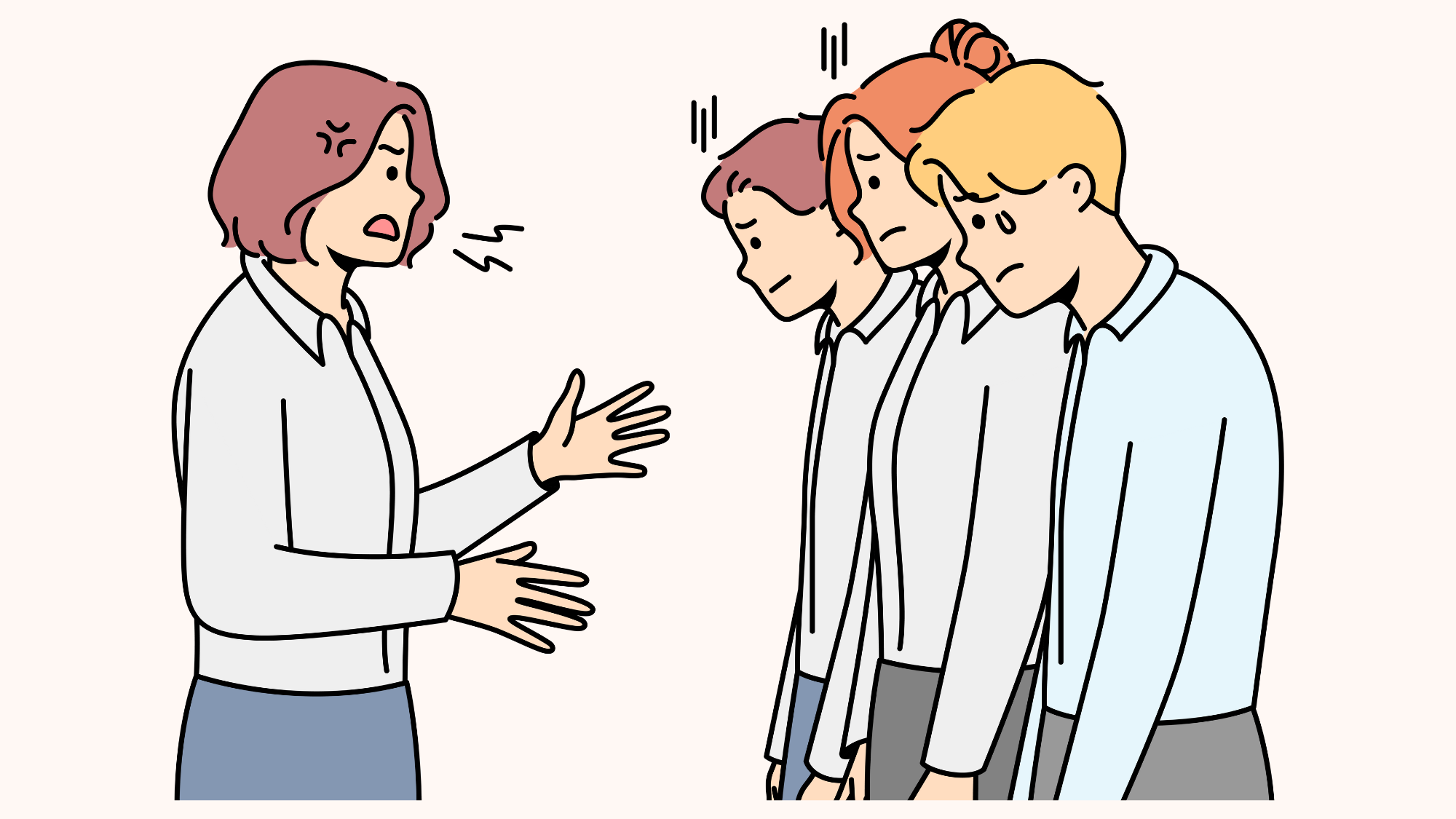
Looking at examples of spiritual abuse can help us understand what it is and how it hurts people.
I have spent a lot of time listening to people’s stories at the Support Service at the Charity for Action on Spiritual Abuse, and the same themes come through again and again.
These examples of spiritual abuse are made-up, but they are based on research, first-hand stories, and my own experiences.
Some of them are more extreme than others. That’s on purpose, to show how spiritual abuse happens on a scale, from mild to severe. But all of it is abuse, and none of it is ok.

It is not light reading, so please take it gently. If you feel like you are getting overwhelmed, visit the Help for When You Feel Overwhelmed: Getting Through Hard Moments page.
Content notification: sexual abuse, physical abuse, conversion therapy, neglect, financial abuse, coercive control, spiritual abuse.
Examples of Spiritual Abuse
1. Being used unfairly
- People tell you that you need to give your money, time, resources, or body to the group.
- People tell you that you have to work for free.
- People tell you that you need to do these things because scripture or a spiritual leader says so, or because bad spiritual things will happen if you don’t.

Sonia works two jobs to support herself and her children. Her church leader says that God is calling her to do the church’s internship programme. She would have to pay the church thousands of pounds to do the course. When she is unsure, the leader says that God will look after her if she puts Him first. She quits her second job and pays to do the programme. Her children struggle because she has less money to care for them, and is giving all of her spare time to the church.
Fatima is keen to learn more about the Qu’ran. Her Imam invites her for private study sessions. Slowly he begins to push boundaries, suggesting that closeness with him is the same as closeness with Allah. Fatima feels unsure, but trusts the authority of the Imam. She longs for salvation and spiritual progress, and the Imam takes advantage of this to groom her for sexual abuse over a number of years.
2. Forced to share everything
- People tell you to confess private thoughts or feelings.
- People punish you if you’re not completely open.
- People are watching and reporting your actions to leaders.

Yuni is devoted to her guru. Often he will walk up to her and ask her what she is thinking. During their daily sanzen (private meeting), she is expected to be completely open as the guru asks her about her thoughts, feelings or motivations. Often he asks her about sexual thoughts she has had, and about other people’s behaviour. If he feels that she is holding back, he calls her immature and foolish, and ignores her for the rest of the day.
Sam belongs to a men’s small group at church. The leader decides that they need to seek sexual purity together. They are required to tell the leader every time that they watch porn, masturbate, or think sexual thoughts about women. If someone slips up, they are then required to confess in front of the group and be prayed for. Sam is bisexual, and when he confesses to having thoughts about other men, he is told that he must seek conversion therapy to cure him of same-sex attraction.
3. No freedom to choose
- People tell you that you can’t trust your own thinking.
- You need permission from leaders to make choices.
- People tell you that you’re disobeying God or bad things will happen if you don’t follow orders.

Naomi is often ridiculed by her husband when she expresses her own thoughts about things. He mocks her, saying that because women can’t study Torah, she can’t know anything. She is not allowed to make any real decisions about their family life because her husband says that only he can know what the right thing is.
Michael has ADHD and can sometimes be disorganised and impulsive. Because of this, his pastor tells him he needs extra support to live a sin-free life. He is told that he must meet with his pastor every week to work on his discipline. He is also encouraged to call his pastor every time he has an important decision to make. His pastor tells him that doing this will help him live in a way that pleases God. When Michael does something which the pastor doesn’t approve of, the pastor gets very angry and tells Michael he is at risk of going to hell.
4. Keeping secrets
- People punish or threaten you if you ask questions.
- People tell you to protect the group’s reputation, even when you know others are getting hurt.
- People warn you not to speak to outsiders about what goes on.
- People tell you that this has to happen for spiritual or religious reasons.

Aisha knows that her husband is sexually abusing their daughter. When she confronts him about it, he tells her that if she goes to the authorities she will be condemned by Allah for her insolence, because she has ignored her religious duty to respect her husband’s privacy.
Josiah sees the leader of his church behave inappropriately with one of the women in the congregation. He tries to raise it with the leader privately, and is told that he must be mistaken. When Josiah pushes harder, the leader tells him that he must say nothing to anyone, otherwise he is getting in the way of the church’s mission and more people will go to hell, and it will be Josiah’s fault.
5. Pressure to fit in
- People put pressure on you to behave a certain way.
- People tell you that bad things will happen to you spiritually if you don’t follow the rules.
- People put pressure on you to change your identity in ways you don’t want to.
- People leave you out, gossip about or throw you out if you disagree.

Amir is 11 years old. Whenever he gets something wrong, his father tells him that he is disobedient and must be possessed by Jinn. He is often beaten or not given food, and his father says this is to try and free him from the Jinn possession. He is not allowed to come to family events, and other children in the wider family are often kept from playing with him.
Cahya has joined a buddhist group and is training to be ordained. A few months in, he is told he needs to break up with his girlfriend because she is a vikshepa (distraction) and he needs to remain entirely focused on virtue. He is also told that he must move into the community accommodation immediately, even though he has a mortgage on his home which he will continue to pay. When he shows hesitation, he is told that he is being disobedient and there will be bad spiritual consequences unless he does what he is told.
6. Using religion to control
- People tell you that the leader is the only one who understands the scriptures.
- The group uses spiritual activities like chanting, trances or fasting to manipulate your emotions.
- People are claiming to hear from God on your behalf, to override your choices.

Gemma has had mental health struggles in the past, and is on medication to manage her anxiety. She attends a church conference where they speak about God’s healing power. After an emotional worship session, the speaker says that it is not God’s will for people to struggle with mental illness. Gemma goes forwards for prayer, and the woman praying for her tells her that God is saying to stop her medication and to trust him instead. Her friends agree, and against the advice of her doctors she stops taking medication. When her mental health gets worse, she feels guilty, because if she was trusting God enough she would feel fine without medication.
Aiden has recently started following a guru on You Tube, and has joined her course. He is on the first weekend retreat, and has been told to fast for three days before coming. Every day, they spend hours chanting and reading the writings of the guru together, and listening to the guru teach. They have to get up very early in the morning and go to bed late, so Aiden isn’t getting much sleep. He is taught that any time he feels tired or doubts what they are doing, he needs to stop that thought and focus on his mantra instead. Aiden starts to feel floaty and disconnected from who he used to be. His friends notice he is using lots of different language which doesn’t make sense, and is spending less and less time with them.
7. Obeying the abuser
- People tell you that God wants you to obey no matter what.
- People tell you that and suffering are your “spiritual test” or “cross to bear.”
- People use scripture to make you believe the abuse is ok.

Catherine is married to an abusive man who beats her and threatens her children. She speaks with her priest about it, who tells her that because her husband is a Catholic too, divorce is against the teaching of the Bible. He says the physical punishment is her “cross to bear”, she must “submit to her husband”. She is told that her “children must obey their parents”, and that if they were obedient, they wouldn’t be beaten.
Ben has travelled abroad to be part of a missionary training school. At the school, his leaders tell him that he has to be obedient to their teaching if he wants to grow. Any time he makes a mistake, he is punished. At first he is hit with a book. After a while the beating gets worse, and he is hit with a cane. He is told that the beatings are purifying him and making him more Christ-like.
8. Saying the abuser is special
- Leaders are saying they speak directly for God.
- Leaders are saying they are chosen by God and you can’t question them.
- Leaders are saying they have spiritual power that makes them untouchable.

Vihaan belongs to an Ashram led by a well-respected guru. The guru teaches his students to let go of all love for anything worldly, to experience eternal bliss. He promises that if they obey his teaching, they will experience endless joy and peace. But if they disobey him, they will be eternally punished, because the guru has been chosen by God. The students are expected to work long hours for the guru, give all of their money and possessions to the Ashram, and perform sexual favours for him.
Noora’s husband is very controlling. She has to tell him where she goes, who she talks to, and what she spends money on. He tells her what she can and can’t watch on TV, and what books she can read. He says that he is the qawwam (protector and maintainer) of their family, and so Allah has given him the right to make these decisions for her.
9. Being ignored as punishment
- People ignore, gossip about, or shame you when you speak up.
- The group punishes or throw out people who disagree, which makes you scared to say anything.
- Leaders pick favourites, and make others feel less important.

Darren’s best friends have left the church, and the rumour goes around that they are having problems in their marriage. Darren knows this isn’t true – he knows that his friends confronted the leader and were told they had to leave. But Darren is nervous, because he works for the church and all of his friends are there, and his wife and kids believe everything the leader says. By standing up for his friends, he risks losing his job and the respect of his whole community and family.
Amita attends a weekly mindfulness group. She is keen to help and always arrives early to help set up, and tidies up at the end. She also helps to promote the group regularly. But nothing she does seems to be enough for the leader, who often criticises her privately and in front of other people. The leader never criticises another member Sarah, and always publicly praises her. She says to Amita, ‘if only you could be as dedicated as Sarah’. Amita feels very hurt and wonders what more she can do to please her teacher.
10. Your group thinks its the best
- Your group says it is the only one with the truth.
- Your group tells you not to trust people outside the group.
- Your group tells you to cut off your family or old friends, for religious or spiritual reasons.

Jane has moved cities and joins a new church. In her old city, all of the churches worked together on community projects. Her new church doesn’t have anything to do with the other churches in her city. When she asks why, she is told that they aren’t really Christians, because they don’t interpret the Bible in the right way. When she goes to a bible study one evening at a different church, she is told that she has betrayed God and has to repent.
Ravi is getting more involved in an Ashram near his town and has moved into the shared accommodation. He asks for a week off from his volunteering duties to go and visit his family. His guru tells him he must not go, because that would be prioritising earthly attachments. Instead, he must stop speaking to his family because they might get in the way of his spiritual progress distract him. If Ravi stays in touch with his family and the guru finds out, he could be told to leave and lose his housing.
Themes of Spiritual Abuse
By looking at these examples, some themes become clear:
- Spiritual abuse is a type of coercive control, where an abusive person uses spiritual teachings to control other people.
- It can happen in any group, including families, online groups and one-on-one relationships.
- It overlaps with lots of other kinds of abuse, such as domestic abuse, sexual abuse, physical abuse, or financial abuse.
- Anyone can be a victim of spiritual abuse, but women and girls (especially women and girls of colour) are more likely to be victims, because of inequalities which already exist in society.
- It often impacts people who are more dedicated to the group or beliefs. Leaders can also be victims of spiritual abuse.
- Growing up in a spiritually abusive family can be especially damaging, because as a child you rely upon the people abusing you.
To read more about what spiritual abuse is, check out this post: Spiritual Abuse Explained: What it is and how to recognise it
Where To Get Help
If you are worried that you or someone you know might be a victim of spiritual abuse, visit the Get Help for Spiritual Abuse page for support and advice.
You might also like to read these posts:
- Am I Being Spiritually Abused? Signs, Support, and What to Do Next
- Supporting Someone Facing Spiritual Abuse: How You Can Help
Spiritual abuse is not ok. You shouldn’t have to suffer alone. I have seen many people leave spiritually abusive situations and take back their lives. You can too!
Books I Used to Write This Post
- Escaping the Maze of Spiritual Abuse, by Lisa Oakley and Justin Humphreys
- Walking Free From The Trauma Of Coercive, Cultic and Spiritual Abuse, by Gillie Jenkinson
- When Religion Hurts You: Healing from Religious Trauma and the Impact of High-Control Religion, by Laura Anderson
- Take Back Your Life: Recovering From Cults and Abusive Relationships, by Janja Lalich and Madeleine Tobias
- Leaving the Fold, by Marlene Winell
